
How HRMS Payroll Simplifies Salary, Attendance, and Compliance Together
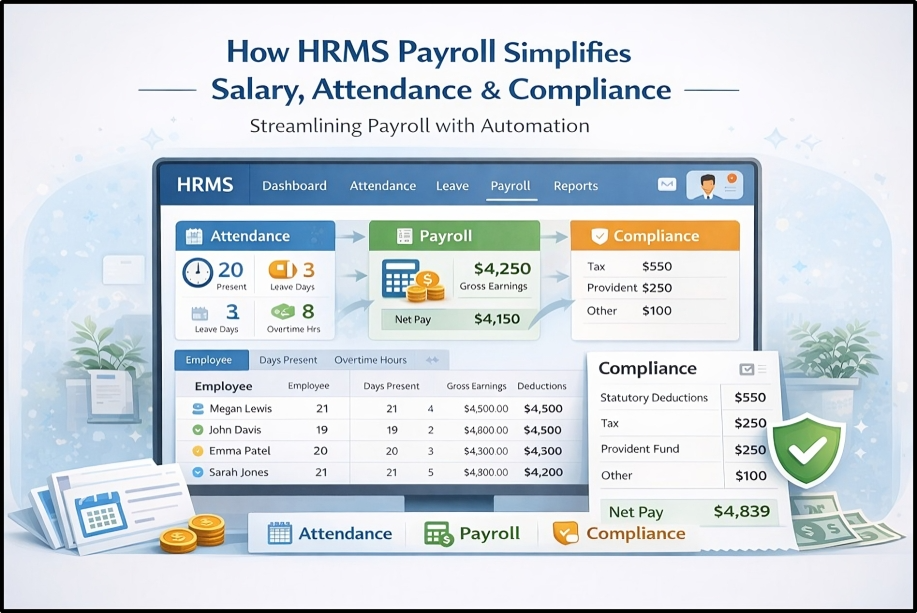
For many HR teams, payroll is no longer just about processing salaries. It has become a complex monthly exercise involving attendance tracking, leave adjustments, overtime calculations, and strict statutory compliance. When these tasks are managed through separate tools or spreadsheets, even small inconsistencies can lead to salary errors, delayed payouts, or compliance concerns. As organizations grow, the manual effort required to reconcile payroll data increases, leaving HR teams stretched thin.
This is where an HR payroll management system changes the way payroll management in HR works. Instead of handling payroll, attendance, and compliance as separate activities, an HRMS payroll system connects them into a single, reliable workflow. Attendance data feeds directly into salary calculations, approved leaves are applied automatically, and compliance requirements are built into the payroll process itself. The result is a smoother payroll cycle, fewer manual corrections, and more time for HR teams to focus on people rather than paperwork.
What Is an HR Payroll Management System?
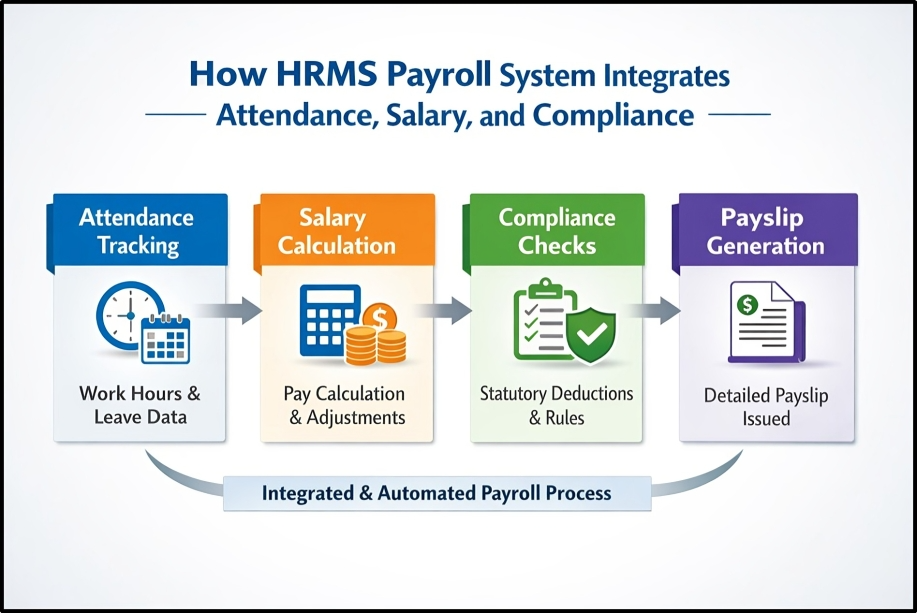
An HR Payroll Management System is a centralized system that manages employee salary processing while staying directly linked to attendance, leave, and compliance data. Instead of running payroll as a separate task at the end of the month, it uses real working hours, approved leaves, and policy rules as part of one continuous process.
This approach allows HR teams to process payroll with fewer manual steps. Attendance data does not need to be imported separately, leave balances do not need to be rechecked, and salary calculations are based on data that already exists inside the system. As a result, payroll becomes more accurate and easier to manage, even as teams grow.
How HRMS Payroll Is Different From Standalone Payroll Software
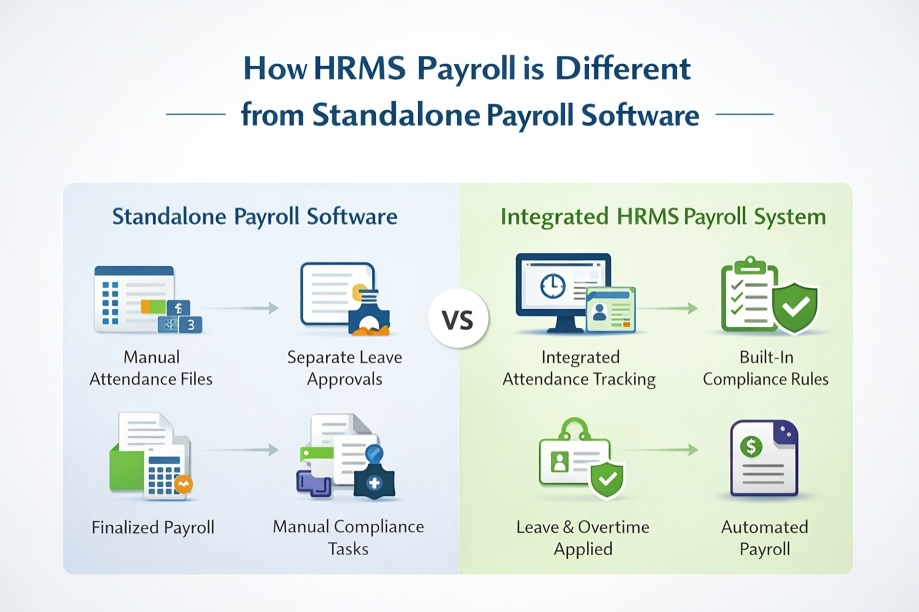
Standalone payroll software is designed mainly for salary calculation and payslip generation. While it can process payroll, it depends heavily on manual inputs. HR teams still need to collect attendance records, leave approvals, and compliance details from other systems or spreadsheets before payroll can be finalized.
An HRMS payroll system works differently. It connects payroll management with core HR functions such as attendance tracking, leave management, and employee records. Payroll is calculated using live HR data rather than manually prepared files. For payroll managers, this reduces reliance on spreadsheets, repeated cross-checking, and last-minute corrections before salary processing.
Why Payroll and HR Integration Matters
Payroll management in HR becomes significantly easier when all related data is available in one system. Integration ensures that:
- Attendance directly influences salary calculations
- Approved leaves are reflected automatically in payroll
- Policy or rule changes apply consistently across payroll cycles
This level of integration improves accuracy, reduces processing delays, and creates a payroll workflow that remains stable as the organization scales.
The Real Problem With Manual Payroll Management
Manual payroll rarely breaks down in obvious ways. Instead, small inefficiencies and errors accumulate over time, making payroll increasingly difficult to manage.
Multiple Tools and Data Silos
Many organizations rely on separate systems for attendance tracking, payroll software for salary processing, and spreadsheets for compliance-related data. This fragmented setup forces HR teams to move information manually between tools. Each transfer increases the risk of outdated data, missing entries, or calculation errors entering the payroll process.
Attendance Mismatches
When attendance data is handled outside the payroll system, mismatches are common. Missed punch-ins, delayed leave approvals, or incorrect overtime entries often surface only during payroll processing. HR teams then spend valuable time reconciling attendance records instead of completing payroll on schedule.
Manual Compliance Tracking
Compliance requirements are rarely static. Tracking statutory deductions and regulatory rules manually increases the risk of oversight. Without an integrated payroll management system, compliance checks often happen after payroll has already been processed, making corrections more time-consuming and disruptive.
Payroll Errors and Repeated Rework
Manual inputs lead to avoidable payroll errors. Salary corrections, revised payslips, and employee queries become part of every payroll cycle. Over time, this repeated rework reduces confidence in payroll accuracy and consumes HR resources that could be used for more strategic responsibilities.
How HRMS Payroll Connects Salary and Attendance Automatically
One of the main reasons organizations move to an HR payroll management system is to remove manual dependency between attendance and salary processing. In traditional setups, HR teams prepare attendance files separately and reconcile them at the last moment. HRMS payroll changes this by using attendance data as a built-in part of payroll, not an external input.
Attendance Data Flows Directly Into Payroll
In an HRMS payroll setup, attendance tracking operates within the same system as payroll management. Working hours, shift schedules, and approved attendance records are already available when payroll processing begins. This eliminates the need to export attendance sheets or manually validate punch data before each payroll cycle. Because salary calculations rely on recorded work data, payroll outcomes remain consistent and accurate. HR teams no longer have to rely on adjusted figures or last-minute corrections to finalize salaries.
Leave, Overtime, and Absences Handled Automatically
Leave approvals, overtime entries, and unpaid absences often create payroll delays when managed manually. In an integrated payroll management system, these elements are applied automatically based on approved records. Approved leaves are deducted correctly, overtime hours are added according to policy, and absences are reflected without additional calculations. This reduces back-and-forth between HR and payroll teams and helps payroll managers complete processing on time, even during busy payroll cycles.
The Role of a Payroll Manager in an HRMS Environment
HRMS payroll changes how payroll managers work. Instead of collecting and validating data from multiple sources, the payroll manager focuses on reviewing system-generated calculations and resolving exceptions. Routine data flow is handled by the system, allowing payroll professionals to spend more time on accuracy checks and less time on manual data entry. This shift improves control without increasing workload.
Payroll Compliance Made Simple With HRMS
Compliance is not a separate task in payroll management in HR. It is an essential part of salary processing. When compliance is handled manually, it often becomes reactive, addressed only after issues arise. An HRMS payroll system brings compliance into the payroll workflow from the start.
Statutory Rules and Deductions Built Into Payroll
Payroll software within a Human Resource Management System framework includes statutory rules and deduction structures as part of salary processing. Required deductions are applied consistently according to defined policies, reducing dependence on manual calculations and external tracking sheets. This ensures that payroll remains aligned with regulatory requirements across every payroll cycle, without additional checks after salaries are processed.
Reduced Compliance Risk Through Automation
Manual compliance tracking increases the likelihood of missed updates or incorrect deductions. HRMS payroll reduces this risk by applying compliance rules automatically during payroll processing. Since checks happen as part of the workflow, potential issues are identified early rather than after payroll completion. This proactive approach lowers exposure to penalties and minimizes corrective actions.
Audit-Ready Payroll Records
An integrated payroll management system maintains clear records of salary calculations, attendance data, and applied deductions. These records are structured and easy to trace, making audits simpler and less disruptive. HR teams can access payroll history without reconstructing data from multiple systems, reducing both audit preparation time and stress.
Why Payroll Management in HR Is Incomplete Without Compliance Tracking
Payroll does not end when salaries are paid. Without consistent compliance tracking, payroll management in HR remains incomplete. An HRMS payroll system ensures that attendance, salary, and compliance are handled together, creating a reliable payroll process that supports employees, auditors, and organizational accountability.
Step-by-Step: How to Manage Payroll Using an HRMS
Managing payroll through an HR payroll management system follows a clear and repeatable process. Each step connects directly to the next, which reduces manual effort, limits errors, and keeps payroll cycles predictable. This is how payroll management in HR typically works when an HRMS payroll system is in place.
Employee Attendance Tracking
Payroll starts with attendance. In an HRMS payroll setup, working hours, shifts, and attendance records are captured within the same system used for payroll. Because this data is already available and approved, HR teams do not need to collect, merge, or validate attendance records before payroll begins. This removes one of the most common causes of payroll delays.
Leave and Overtime Approval
Leave requests and overtime entries are updated in real time once approved. These records automatically become part of payroll data, ensuring unpaid leaves, paid time off, and overtime hours are applied correctly during salary processing. By handling these adjustments upfront, HR teams avoid last-minute changes and repeated recalculations at month end.
Salary Calculation
With attendance, leave, and overtime data already in place, the payroll management system calculates salaries based on defined policies. Salary components, deductions, and adjustments are applied consistently across employees, reducing dependence on spreadsheets and manual checks. This step brings structure and predictability to salary processing.
Compliance Checks
In an HRMS environment, compliance checks are part of the payroll workflow. Statutory deductions and policy rules are applied during salary calculation rather than after payroll is completed. This allows HR teams to identify and resolve issues early, before salaries are finalized. As a result, payroll remains compliant without adding extra review cycles.
Payslip Generation
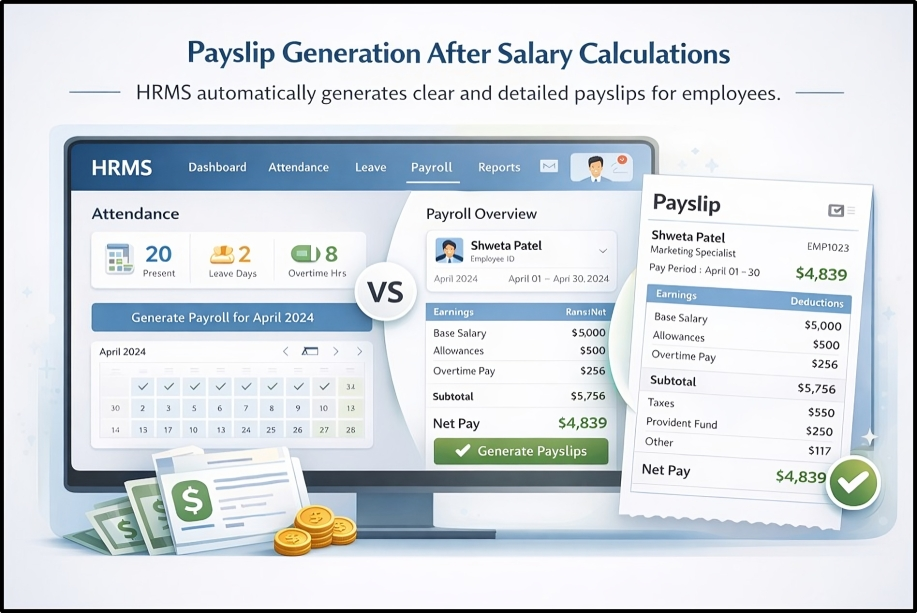
Once payroll is finalized, payslips are generated directly from the system. Payslips clearly reflect salary components, attendance impact, and deductions, which reduces employee questions and follow-up corrections. Clear payslips also improve employee trust in the payroll process.
Payroll Reporting
After payroll processing, the HRMS payroll system generates reports using the same data used for salary calculations. These reports support internal reviews, audits, and financial planning without requiring separate data preparation or reconciliation. This closes the payroll cycle with accurate, ready-to-use records.
Payroll Software vs HRMS Payroll System
Choosing between standalone payroll software and an HRMS payroll system depends on how payroll management in HR is structured within the organization. While both options can process salaries, their long-term impact on accuracy and workload is very different.
What Payroll Software Alone Can Do
Standalone payroll software is built to calculate salaries and generate payslips. When attendance data, leave records, and compliance inputs are provided manually, it can process payroll accurately. For very small teams with limited complexity, this setup may work temporarily. However, it relies heavily on external data preparation.
What Payroll Software Cannot Do
Payroll software on its own does not manage attendance, leave approvals, or employee records. HR teams must gather data from multiple tools or spreadsheets before each payroll cycle. This manual coordination increases the risk of errors, delays, and repeated rework. As payroll volume grows, these gaps become harder to manage.
Why Businesses Move to HRMS Payroll
Businesses adopt HRMS payroll when manual coordination starts slowing payroll cycles and increasing risk. By connecting payroll software with attendance tracking, leave management, and compliance data, an HRMS payroll system simplifies processing and improves accuracy. This integration gives HR teams better control over payroll management in HR and allows payroll processes to scale without adding complexity.
Who Benefits Most From an HRMS Payroll Management System?
An HR payroll management system is not limited to large enterprises. It delivers practical value to organizations of different sizes, especially where payroll accuracy, consistency, and compliance are essential.
Small Businesses
Small businesses often run payroll with limited HR resources. While manual methods may work at first, even small errors can consume time and affect employee trust. An HRMS payroll system gives small teams structure from the beginning by keeping attendance, leave, and salary calculations connected. This makes payroll management in HR more reliable without increasing administrative overhead.
Growing Companies
As organizations expand, payroll becomes more complex. New hires, role changes, variable attendance, and evolving policies make manual payroll harder to manage. Growing companies benefit from HRMS payroll because it scales smoothly. Payroll rules stay consistent, attendance data remains accurate, and salary processing does not become more time-consuming as headcount increases. This stability helps growing teams avoid payroll disruptions during periods of change.
HR Teams Handling Multiple Locations
Managing payroll across multiple locations introduces challenges such as different shift structures, attendance patterns, and local rules. An HRMS payroll system centralizes payroll management while supporting location-specific requirements where needed. HR teams gain clear visibility across locations without maintaining separate systems, making payroll easier to control and faster to process.
Businesses With Compliance Complexity
Organizations operating under strict or frequently changing compliance requirements face higher payroll risk. Manual compliance tracking increases the chance of missed deductions or reporting gaps. HRMS payroll supports payroll management in HR by applying compliance rules as part of salary processing, not after payroll is completed. This reduces exposure to penalties and keeps payroll consistent across reporting periods.
Key Features to Look for in the Best HRIS and Payroll Software
Choosing the right system matters as much as adopting one. The best HRIS and payroll software supports accurate payroll while simplifying everyday HR work.
- Payroll automation: Automates salary calculations, deductions, and adjustments to reduce manual effort and repeated corrections.
- Attendance integration: Connects working hours, shifts, and leave data directly to payroll so salaries reflect actual attendance.
- Compliance support: Applies statutory rules and policy-based deductions during payroll processing to lower compliance risk.
- Employee self-service: Allows employees to access payslips, submit leave requests, and update details without HR intervention.
- Payroll analytics: Provides clear payroll reports and insights to support audits, reviews, and financial planning.
Common Questions About HRMS Payroll
Is HRMS Payroll Suitable for Small Businesses?
Yes. HRMS payroll is well suited for small businesses, especially those operating with limited HR capacity. By keeping attendance, leave, and salary data connected, it helps small teams manage payroll management in HR with more structure from the beginning. This reduces manual effort early on and prevents payroll issues as the business grows.
Can HRMS Replace a Payroll Manager's Manual Work?
HRMS payroll does not replace the payroll manager's role, but it significantly reduces manual tasks. Instead of collecting data, reconciling spreadsheets, and fixing avoidable errors, payroll managers focus on reviewing calculations, handling exceptions, and ensuring accuracy. The system manages routine data flow, while decision-making and oversight remain with the HR team.
Does HRMS Reduce Payroll Errors?
Yes. HRMS payroll reduces payroll errors by using real attendance data, approved leave records, and predefined rules directly in salary calculations. Because information does not move between multiple tools, the risk of mismatches, missed entries, or incorrect adjustments is much lower than with manual payroll processes.
Is Payroll Compliance Easier With HRMS?
Payroll compliance becomes easier with HRMS because compliance rules are applied as part of payroll processing, not after salaries are paid. Statutory deductions, policy-based rules, and reporting requirements are built into the workflow. This allows HR teams to maintain compliance consistently across payroll cycles with fewer last-minute corrections.
Conclusion
Managing payroll through disconnected tools adds unnecessary complexity to salary processing. An HR payroll management system simplifies payroll management in HR by bringing salary, attendance, and compliance into one connected workflow.
Frequently Asked Questions
Is Excel enough for payroll management?
Excel can work for very small teams with fixed salaries, but it quickly becomes unreliable once attendance, leave, overtime, or compliance is involved. Manual tracking increases the chance of errors, missed deductions, and repeated corrections. An HR payroll management system replaces spreadsheets with structured, connected data that stays accurate as payroll requirements grow.
When should a company switch to HRMS payroll?
A company should consider switching when payroll starts taking more time each month, errors occur more often, or multiple tools are used to manage attendance, leave, and salaries. These are clear signs that manual payroll is no longer sustainable and payroll management in HR needs a more organized approach.
Can small teams use HRMS payroll effectively?
Yes. HRMS payroll is especially helpful for small teams that want to avoid payroll problems as they expand. It allows small businesses to manage attendance, leave, and salary calculations in one place, without increasing administrative workload or adding new HR staff.
What are the risks of manual payroll tracking?
Manual payroll tracking increases the risk of attendance mismatches, incorrect salary calculations, missed compliance obligations, and delayed payroll processing. Over time, these issues reduce employee confidence in payroll accuracy and place ongoing pressure on HR teams.
Does HRMS payroll require technical expertise?
No. Most HRMS payroll systems are designed for HR and payroll professionals, not technical users. Payroll managers work through guided steps, approvals, and reports, while the system handles calculations and data flow in the background.
Will HRMS payroll change existing HR workflows?
HRMS payroll improves workflows rather than replacing them entirely. Core HR responsibilities remain the same, but manual steps such as data collection, reconciliation, and repeated checks are reduced. This leads to smoother payroll cycles and better visibility across payroll data.
Is HRMS payroll only useful for large organizations?
No. HRMS payroll benefits organizations of all sizes. Large companies use it to manage scale and compliance, while small and growing businesses use it to establish reliable payroll practices early and avoid issues as complexity increases.